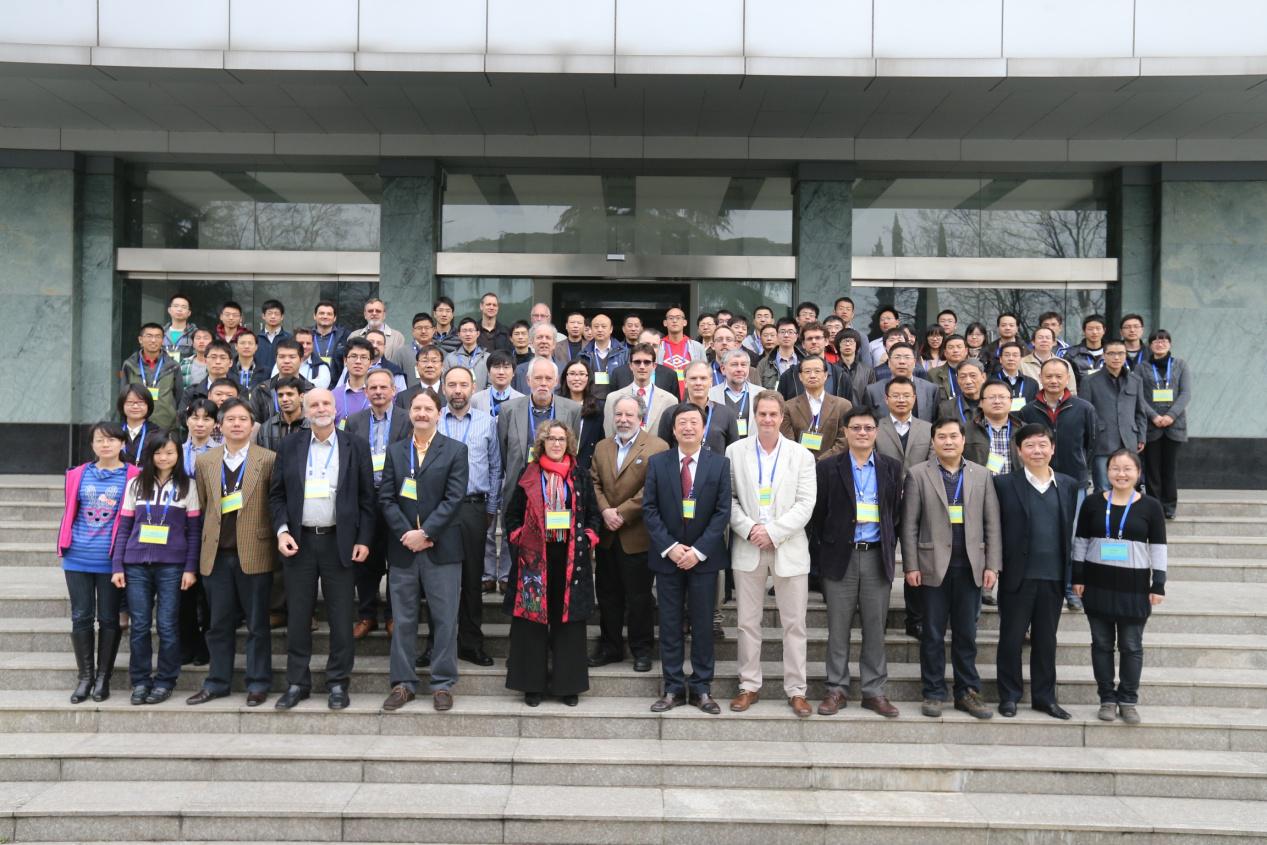
The 18th ITPA Div-SOL group meeting was held in ASIPP from Mar. 19 to Mar. 22.
92 people in total attended the meeting. 31of the attendees were foreign participants from institutes or universities including Princeton Plasma Physics Laboratory, Princeton University, University of California San Diego, Max-Planck Institute for Plasma Physics and Japan Atomic Energy Agency, while 25 of them were from Southwestern Institute of Physics and other domestic universities, which generally have cooperation with ASIPP. The rest were those who were interested in the topics of the group meeting, mostly students and staff members from ASIPP.
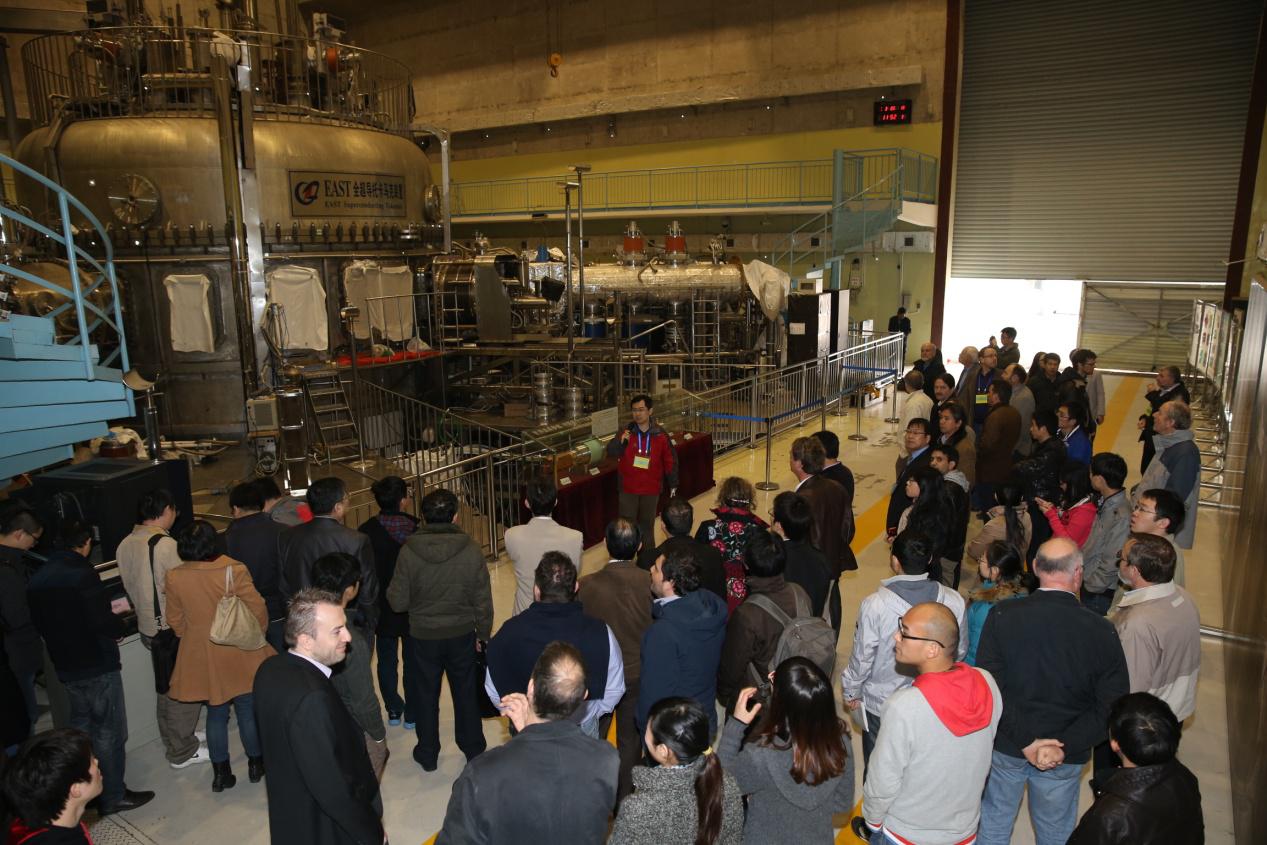
In the opening session, LI Jiangang, the director of ASIPP, warmly welcomed all the participants and expressed his appreciation for their cooperation in the research of Div-SOL physics as well as the achievements they’ve made in this field. After this, Dr. Emmanuelle Tsitrone introduced the agenda of the meeting. There were 8 topics for this meeting. They were EAST Upgrades, fuel retention, dust mitigation, the width of the SOL in both divertor and limiter configuration, heat flux of ELMs, detachment, the damage bring by heat flux on tungsten, molecular dynamics simulation and advance in tungsten technology. A discussion session was included for each of these topics. On the third day, Mar. 20, all the participants had a tour to EAST device during which professor LUO Guangnan and XU Guosheng gave professional interpretation for them.
The ITPA DSOL group meeting plays as a platform for communication between fusion scientists from worldwide research organizations on the cooperative studies in issues such as the plasma-wall- interaction issue, particle transport in divertor and scrape-off-layer regions, and confinement of the core plasma. It also provides an opportunity for younger generation scientists to follow the newest development in this field and to learn related advanced knowledge. Participants from all sides report their recent achievements and discuss the to-be-solved issues as well as the possible solutions to them in this field with each other. During the 18th ITPA DSOL meeting, scientists have paid particular attention to the mitigation of dust in future ITER device, the relevant design of the first wall, and the width of heat flux in the SOL.
In recent years, with EAST being operated in ASIPP as the first superconducting tokamak device in the world, China is playing a more and more important part in fusion researches. The cooperation in physical and technical studies in fusion research between Chinese fusion workers and foreign researchers is now becoming much closer. And both physical and technical research in fusion research benefit a lot from this close cooperation. (Xiang Lingyan reports)
Group photo of all the participants of 18th ITPA DSOL meeting
The EAST tour
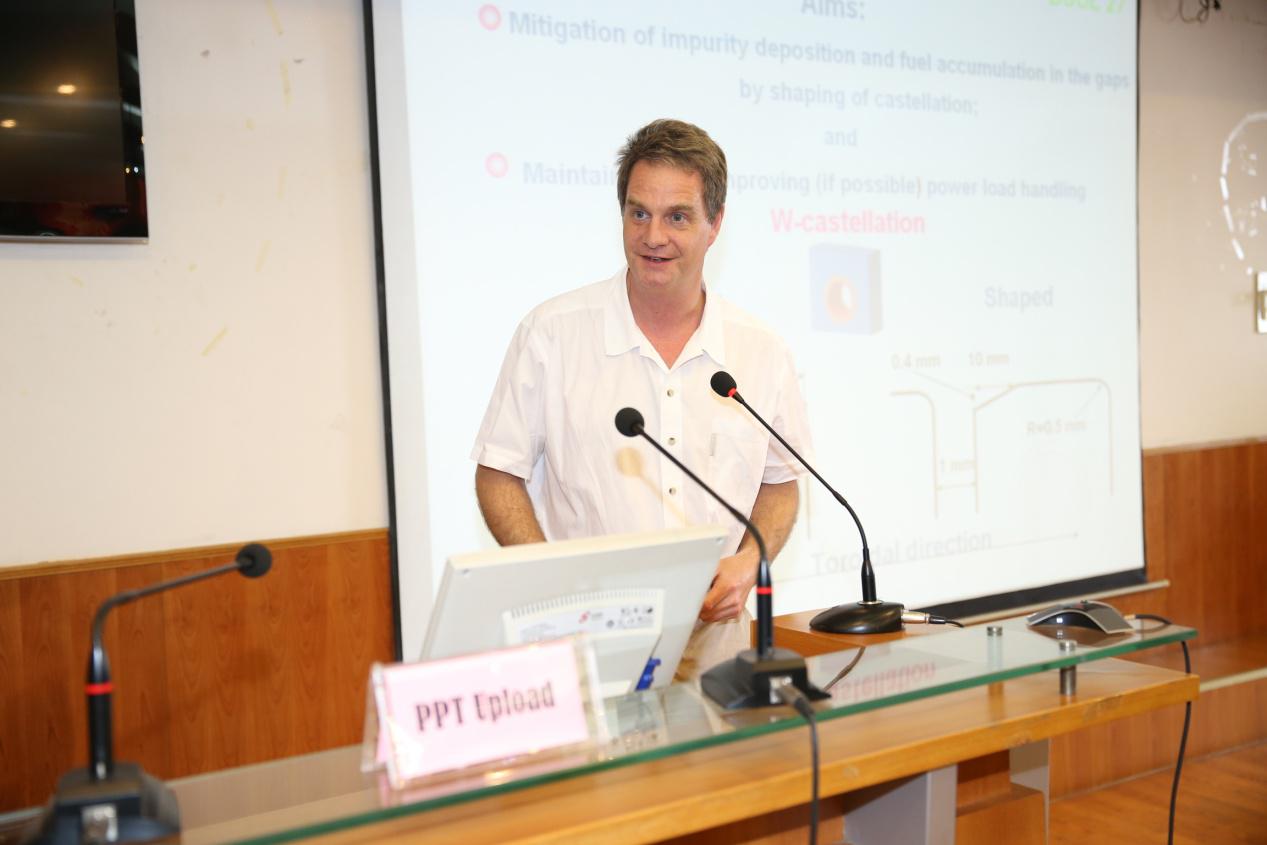
Dr. Richard Pitts raised some questions in a discussion session.
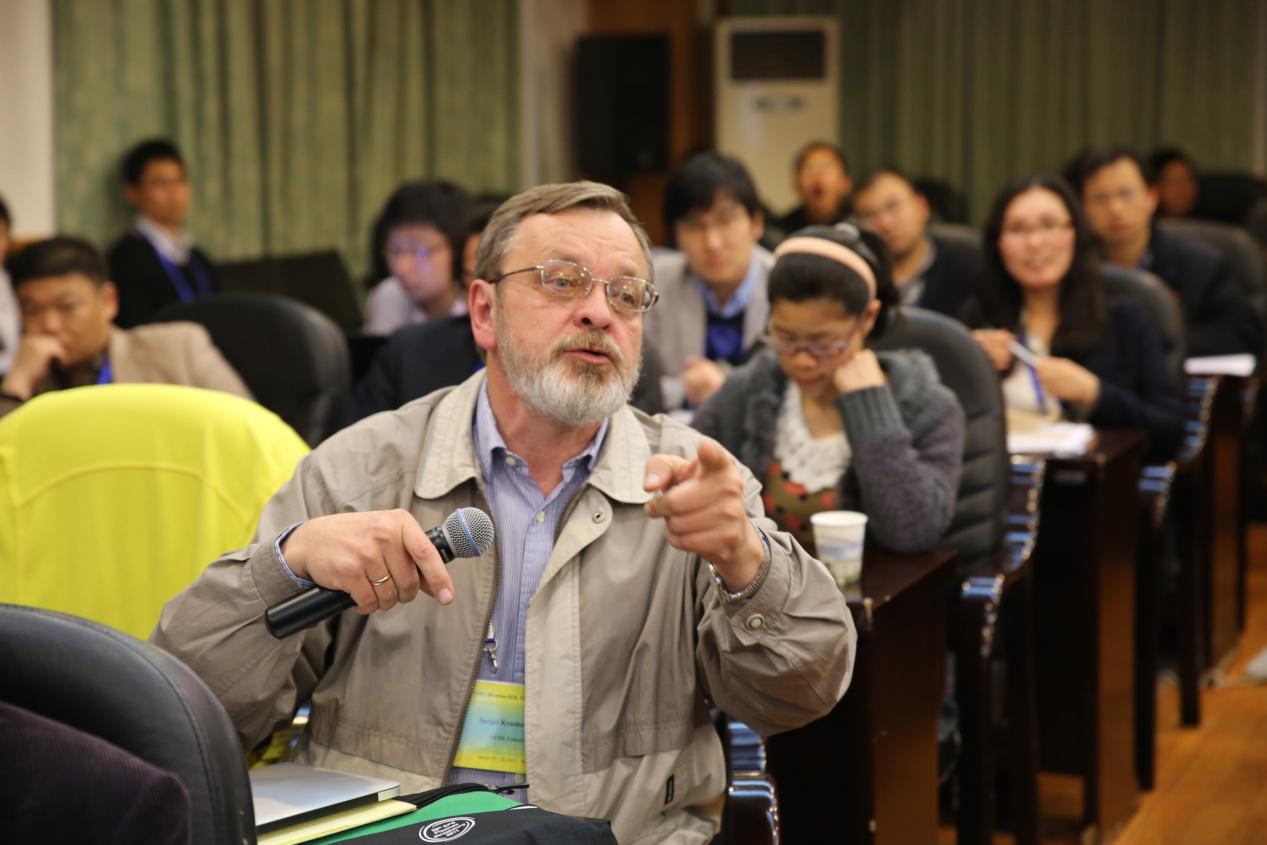
Prof. Sergei Krasheninnikov expressed his opinion in a discussion session.