
count: [2026-09-09] [Close]
Researchers at ASIPP have made a new breakthrough in understanding neoclassical transport of high‑Z Tungsten impurities in tokamak plasmas. Prof. PAN Chengkang proposed a physical mechanism due to the poloidal asymmetric distribution of the lower-Z impurities to change the characteristic of the Tungsten neoclassical transport. These research results have been published in Nuclear Fusion.
The control of the Tungsten impurity is crucial for achieving the desired fusion plasma conditions in the currently operating tokamaks as well as in the future fusion reactors. With the widespread use of Tungsten materials for the divertor and the first wall in the tokamaks, the transport and the core accumulation control of the Tungsten have gained significant attention. A deeper understanding of the Tungsten transport physical mechanisms will aid in developing effective control strategies for the Tungsten impurity. While the neoclassical transport plays an important role in the Tungsten transport process. Additionally, the various impurities inevitably exist in the tokamak plasmas. The injection of the lower-Z impurities is widely used to improve the core plasma parameters and mitigate the heat flux on the divertor target plates. Experimental observations have demonstrated that the injection of lower-Z impurities has a substantial impact on the Tungsten transport.
Based on the developed theoretical work for the Tungsten neoclassical transport in the tokamaks, this study further developed a neoclassical transport theory for the Tungsten with the effects of lower-Z impurities included. The study reveals that the coexisting of the lower-Z impurities will change the Tungsten neoclassical transport characteristic. The dependence of the Tungsten neoclassical transport on the radial gradients of the bulk ion given in the traditional theory is broken. The poloidal asymmetric distribution of the lower-Z impurities serves as the main physical mechanism. And the conditions under which such mechanism plays a dominant role in the Tungsten neoclassical transport were given. The study also identified a threshold for the bulk ion radial gradients (R/LnT)cri. When this threshold is exceeded, the Tungsten neoclassical transport will be enhanced as the content of the lower-Z impurities increases. Conversely, the Tungsten neoclassical transport will be weakened as the content of the lower-Z impurities increases. Consequently, the use of traditional theory to calculate the Tungsten neoclassical transport may yield certain deviations.
These findings are of significant importance for accurately assessing the Tungsten neoclassical transport and exploring strategies for controlling the Tungsten impurity. And it will facilitate a deeper understanding of the physical mechanisms underlying the improvement of the plasma confinement through the lower-Z impurities injection.
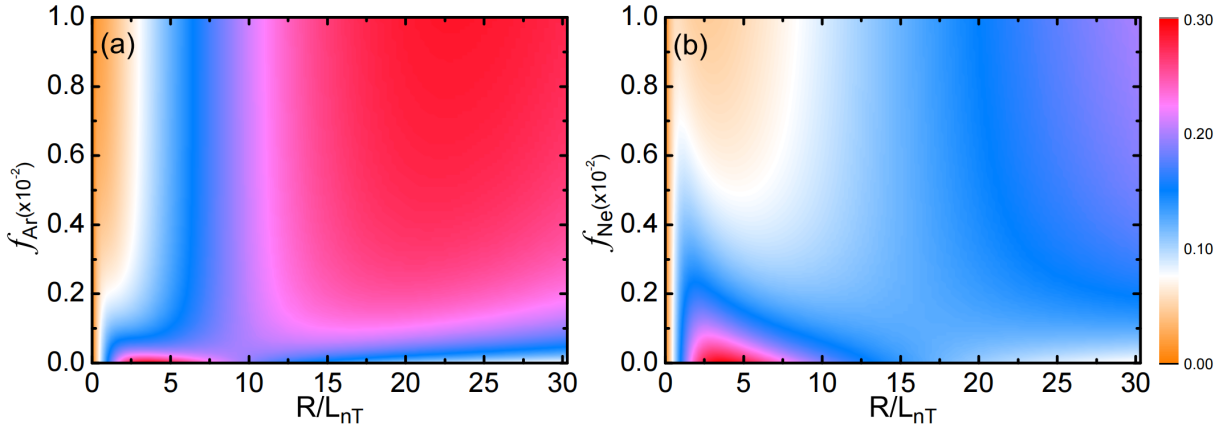
Figure 1. The dependence of the Tungsten neoclassical particle flux on the bulk ion radial gradients and the lower-Z impurity content.
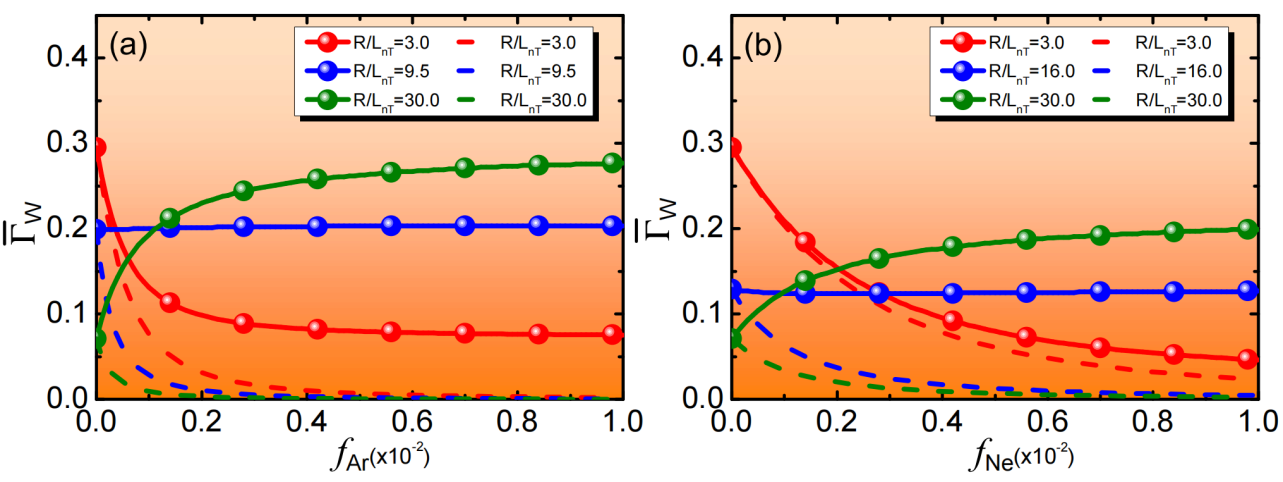
Figure 2. The dependence of the Tungsten neoclassical particle flux on the lower-Z impurity content.
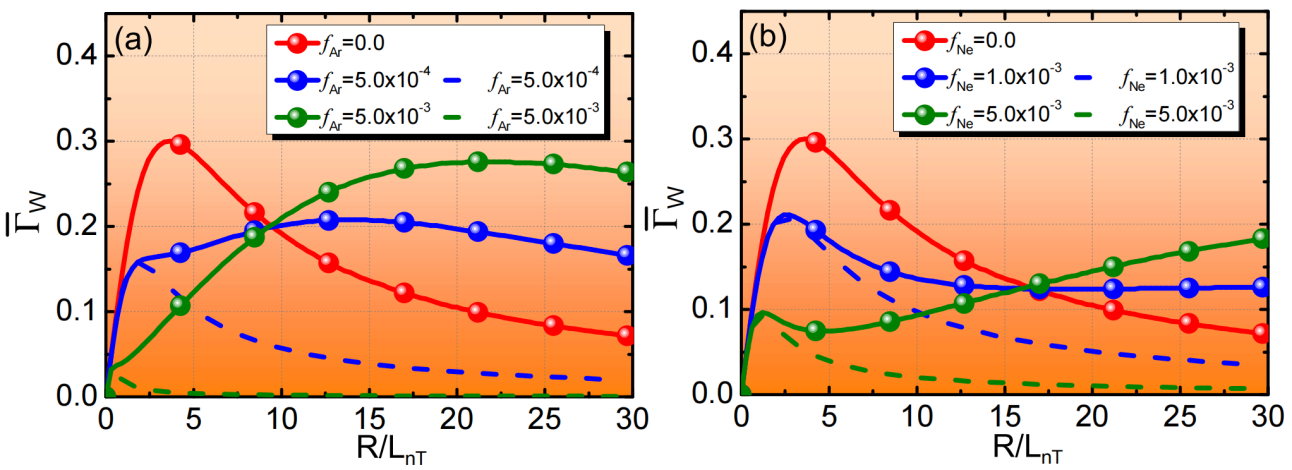
Figure 3. Change of the Tungsten neoclassical transport characteristic due to the lower-Z impurities.
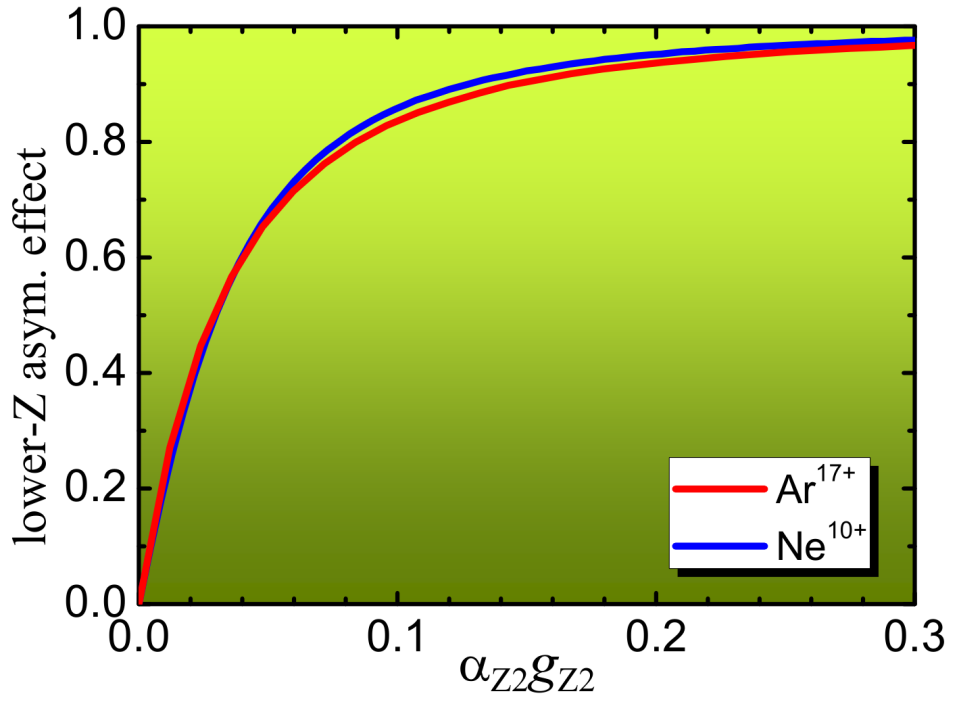
Figure 4. The contribution of the lower-Z impurity poloidal asymmetry effect on the Tungsten neoclassical transport.
Paper links:
https://iopscience.iop.org/article/10.1088/1741-4326/acbc36
https://iopscience.iop.org/article/10.1088/1741-4326/ad5218
https://iopscience.iop.org/article/10.1088/1741-4326/ae9ab0
Contributor: PAN Chengkang
© Institute of plasma physics, Chinese Academy of Sciences

Official account


