
count: [2026-07-03] [Close]
On June 30, the Joint Laboratory for Fusion Reactor Materials Irradiation and Evaluation,co-established by the Institute of Plasma Physics, Hefei Institutes of Physical Science, Chinese Academy of Sciences (ASIPP) and the Institute of High Energy Physics, Chinese Academy of Sciences (IHEP), was officially inaugurated. Based on major national science and technology infrastructures and complementary research platforms of the two institutes, this collaborative initiative responds to national demands for fusion energy development and targets technical challenges faced by key fusion reactor materials. It also marks new progress in collaborative research and joint platform development in China’s field of fusion reactor materials irradiation and evaluation.
On the same day, the Academic Committee of the joint laboratory was set up. Academician LI Jiangang of the Chinese Academy of Engineering was appointed Committee Chair, while Academicians JIANG Chengbao, LIU Zhengdong, LU Zhaoping and WANG Weihua serve as Vice Chairs. The first academic symposium held afterwards brought together more than 70 experts and scholars from China and abroad, including representatives from the ITER Center, institutions affiliated with the Chinese Academy of Sciences, China International Engineering Consulting Corporation, and specialists in fusion reactor materials, neutron irradiation, and post-irradiation property evaluation. Participants held in-depth discussions over the laboratory’s positioning, priority research themes, platform development and long-term development roadmap. They also put forward constructive suggestions on research planning, inter-institutional coordination, engineering verification and open sharing of resources, laying a solid foundation for the steady construction and sound development of the laboratory.
Fusion reactor materials underpin the transition of fusion energy from scientific experiments to engineering implementation and eventual commercial application. Future reactors will operate under extreme conditions—high heat loads, intense irradiation, and complex stresses. The structural stability and performance reliability of candidate materials under such harsh environments directly determine the safety, service life and engineering feasibility of core fusion components. Accordingly, research on fusion reactor materials increasingly relies on large research infrastructures, cross-institutional collaboration and interdisciplinary integration. The joint laboratory is launched to address this core technical challenge, serving as a forward-looking arrangement for future fusion reactor research as well as a practical attempt to integrate innovation resources via major national scientific facilities and boost original innovation capacity.
ASIPP has long focused on China’s fusion energy priorities. With platforms such as the Experimental Advanced Superconducting Tokamak (EAST) and the Comprehensive Research Facility for Fusion Technology (CRAFT), it has built a systematic foundation in component development, materials performance evaluation, and engineering applications. EAST provides experimental conditions and operational experience for research on key fusion technologies. Designed to accommodate future fusion reactor construction, CRAFT delivers an integrated engineering verification platform for research on key systems, components and associated structural materials. Practical demands generated continuously by these two major facilities also define clear application orientation and engineering objectives for fusion reactor materials research.
IHEP, relying on the China Spallation Neutron Source (CSNS), a major national science and technology infrastructure, has distinctive strengths in neutron scattering, neutron diffraction, neutron imaging and the characterization of material microstructures. Neutrons act as effective probes for investigating material internal structure, defect evolution and in-service performance. Thanks to strong penetration, sensitivity to light elements and compatibility with in-situ dynamic characterization, neutron-based techniques help reveal the evolution of microstructure, defect generation, elemental migration and property degradation of materials under complex environments, especially irradiation conditions. Such technical capabilities are essential for analyzing irradiation damage mechanisms, evaluating post-irradiation performance, and establishing correlations between microstructural features and macroscopic mechanical properties of fusion reactor materials.
Through this joint laboratory, the two institutions will leverage their respective strengths: ASIPP’s expertise in identifying fusion engineering requirements, developing fusion reactor materials and conducting comprehensive performance evaluation, and IHEP’s advanced neutron characterization techniques supported by the CSNS. Centered on key research directions including neutron irradiation damage mechanisms of fusion reactor materials, post-irradiation property assessment, multi-scale characterization and engineering service evaluation, the laboratory will improve the complete research chain covering material development, irradiation testing, microstructure characterization, performance assessment and application verification. This will further improve the systematicity, targeted effectiveness and engineering support capability of China’s fusion reactor materials research.
In the next stage, aligned with major national needs and global frontiers of fusion engineering, the joint laboratory will pool high-quality innovation resources and make full use of national large scientific facilities. It will facilitate seamless connection among material development, irradiation qualification testing, property evaluation and engineering verification, striving to build an open, shared and efficiently operated research platform for fusion reactor materials. The laboratory is expected to provide steady support for domestic fusion energy research and the independent development of key fusion reactor materials in China.
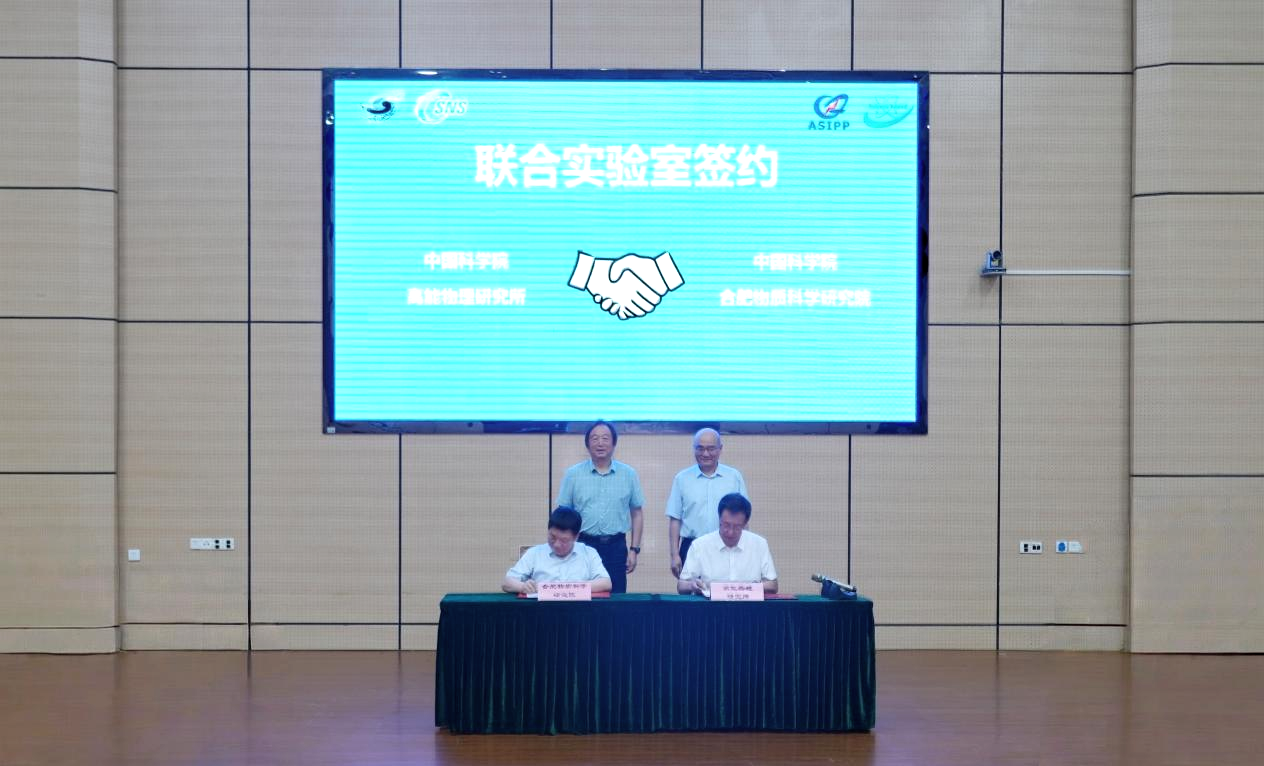
Signing ceremony for the joint laboratory.
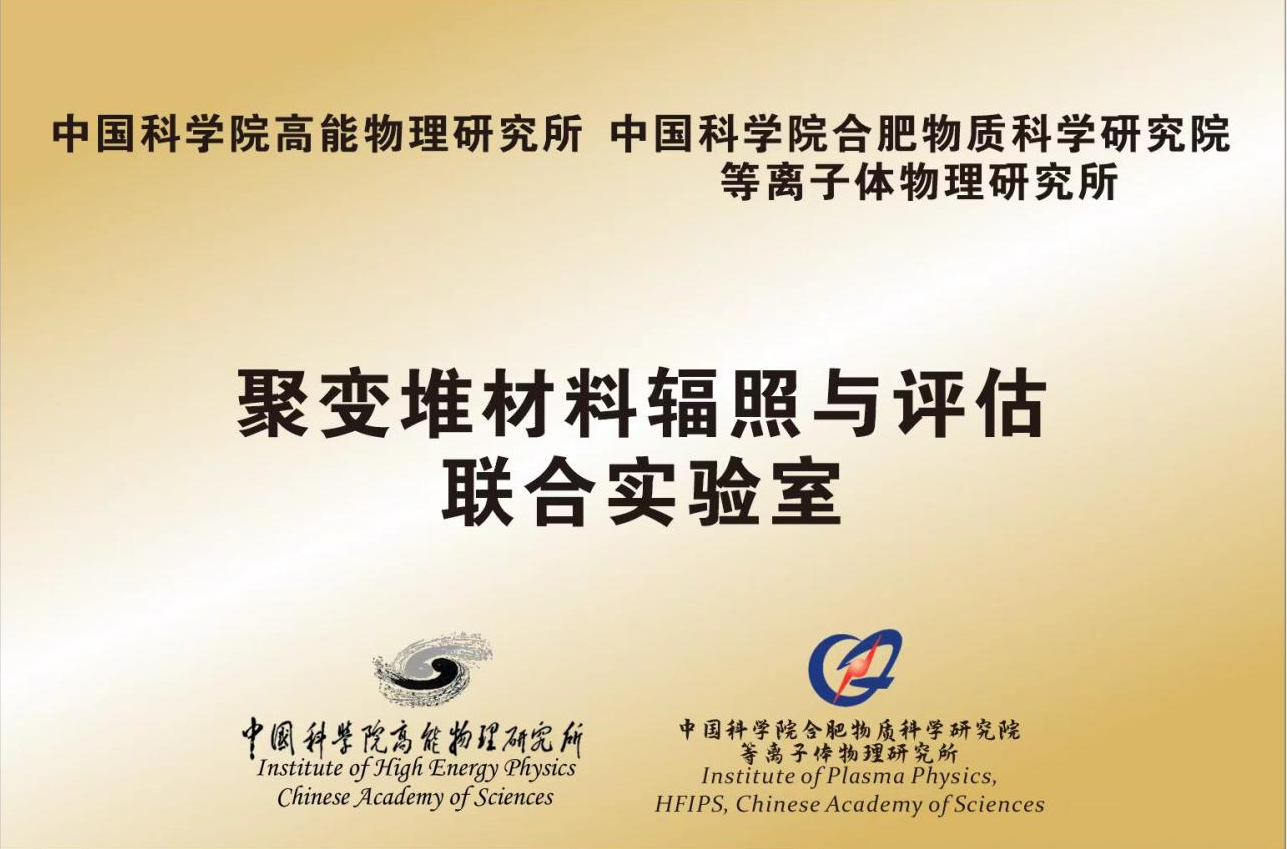
Unveiling ceremony for the joint laboratory.
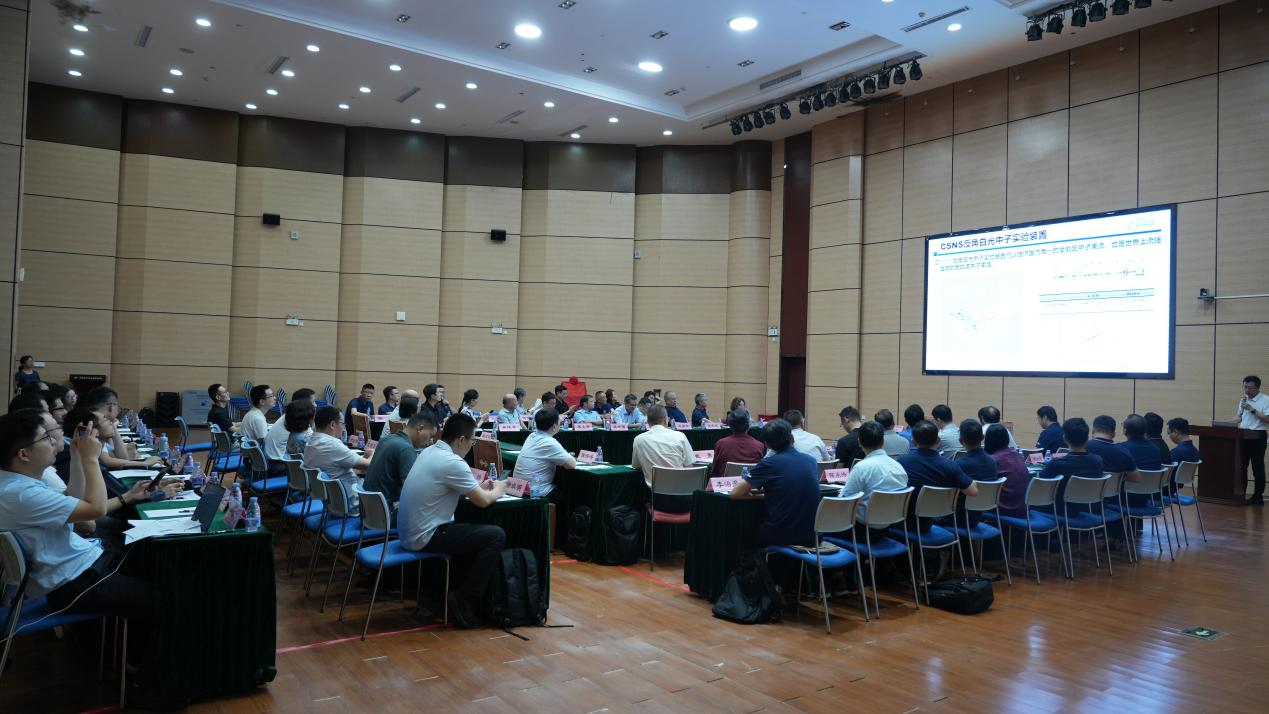
The symposium.
© Institute of plasma physics, Chinese Academy of Sciences

Official account


