
ASIPP Wins Bid for ITER Tokamak In‑Vessel Diagnostic, Fuelling and Instrumentation (IDFI) Installation Project
count: [2026-03-16] [Close]
Recently, the Institute of Plasma Physics, Hefei Institutes of Physical Science, Chinese Academy of Sciences (ASIPP), in collaboration with Shandong Nuclear Power Equipment Manufacturing Co., Ltd., successfully secured the contract for the ITER Tokamak In‑Vessel Diagnostic, Fuelling and Instrumentation (IDFI) Installation Project. This achievement represents a major breakthrough for ASIPP in the core nuclear‑related installation domain of fusion reactors.
Covering nine vacuum vessel sectors and more than 50 work packages of the ITER Tokamak, the IDFI project primarily involves the high‑precision installation of key components, including in‑vessel diagnostic systems, high‑accuracy magnetic sensors, dedicated diagnostic cable assemblies, waveguide transmission systems, and the supporting installation of the fuelling system. Centered on the precision integration of diagnostic systems within the vacuum vessel, the project effectively constitutes the “nerve center” of ITER construction. It places exceptionally stringent demands on installation accuracy, reliability, and cleanliness. All construction activities must comply with the French regulations for Equipment Under Pressure for Nuclear Use (ESPN) and meet ITER Quality Control Level 1 (QC1) standards, while executing technically challenging processes such as specialized welding, Foreign Material Exclusion (FME) control, and Nuclear Pressure Equipment (NPE) conformity assessment.
The successful bid is the result of decades of technical expertise and engineering experience accumulated by ASIPP's EAST (Experimental Advanced Superconducting Tokamak) diagnostic team. Leveraging the EAST facility, the team has developed extensive capabilities in the design, research and development, assembly, commissioning, operation, and maintenance of diagnostic systems. During the bidding process, the team conducted multiple rounds of focused technical studies on precision installation methodologies and quality assurance systems, formulating comprehensive technical solutions fully aligned with ITER's rigorous standards. With demonstrated excellence in precision assembly and large‑scale engineering implementation, ASIPP ultimately stood out in the international competition. This success marks not only a significant milestone in ASIPP's advancement in fusion diagnostic engineering and installation, but also a pivotal step for China in progressing from “diagnostic component manufacturing” to “diagnostic system integration”.
As a core member of the ITER China Team, ASIPP initially undertook 3% of ITER's diagnostic tasks and has since successively secured contracts for major projects, including the ITER Port Plug Structure Manufacturing and ITER Diagnostic Common Components Procurement projects. Through these achievements, ASIPP has steadily expanded its role from component manufacturing to system integration and on‑site installation, with its international influence in the field of fusion engineering continuing to grow.
Looking ahead, ASIPP will further capitalize on its technical strengths, strengthen collaboration with leading domestic partners, ensure the high‑quality execution of the IDFI project, and contribute Chinese expertise and solutions to the successful advancement of the ITER Project and the global development of fusion energy.
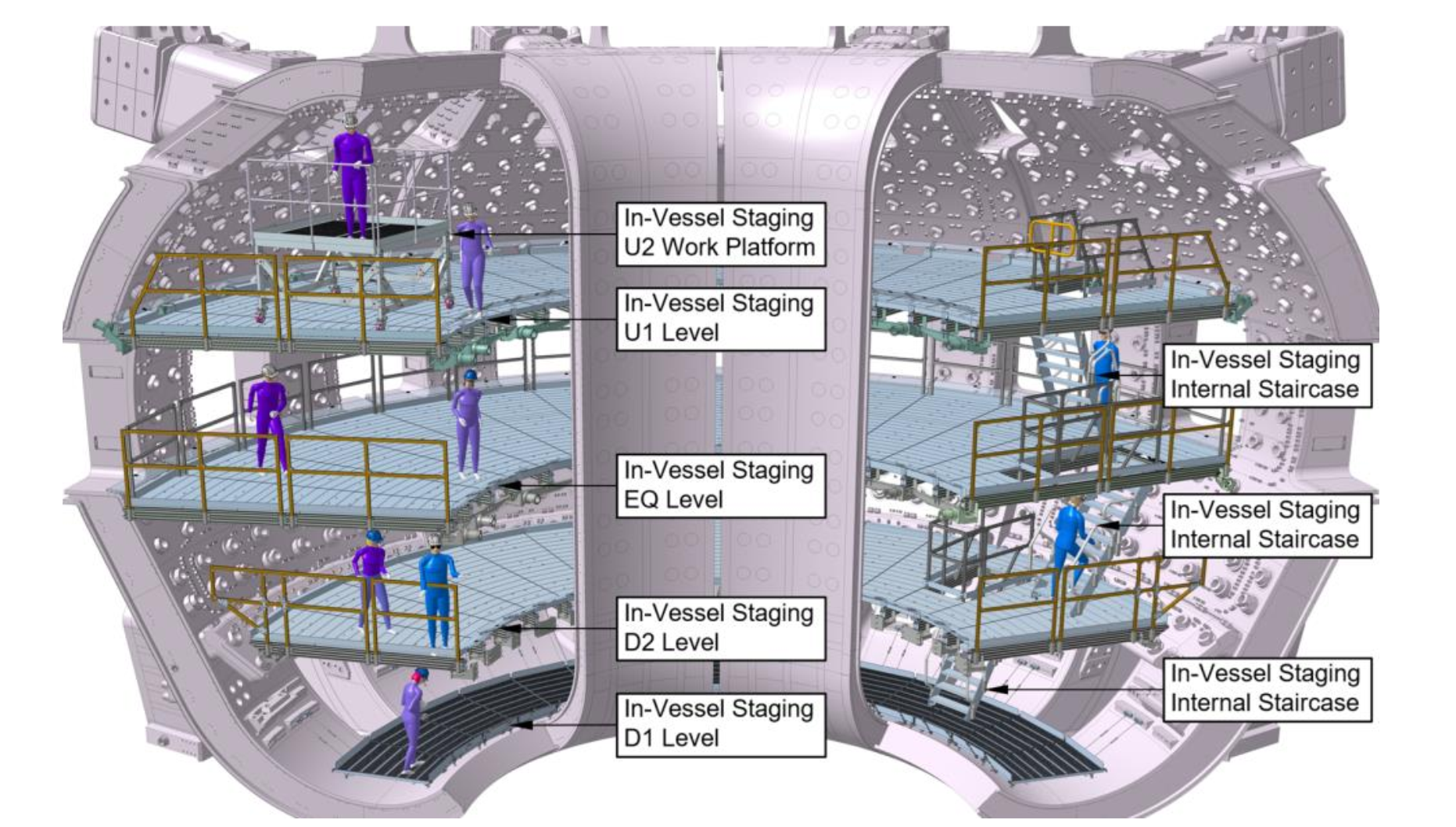
Depiction of the ITER VV IDFI In-situ Task Platforms
© Institute of plasma physics, Chinese Academy of Sciences

Official account


