
count: [2026-01-09] [Close]
Recently, a research team led by Prof. Guo Bin from the Hefei Institutes of Physical Science, Chinese Academy of Sciences, has systematically summarized the progress, key challenges, and solution pathways for converting fusion energy into electricity.
The review results were published in the Journal of Energy (https://doi.org/10.1016/j.energy.2025.139722).
Fusion power plants generate thermal energy across a wide range of temperature levels, primarily from the blanket, divertor, and vacuum vessel, with outlet temperatures ranging from approximately 150 °C to above 1000 °C, depending on reactor concepts and coolant selection. Effectively converting this distributed and multi-grade heat into electrical power remains one of the most critical challenges for the commercialization of fusion energy.
This work represents the first comprehensive review in the field of fusion energy to jointly examine primary heat transfer systems and energy conversion systems, consolidating previously fragmented studies into a unified analytical framework. The review systematically summarizes existing research progress, identifies key technical problems and engineering challenges, and proposes integrated solution strategies for efficient and reliable fusion power conversion.
The researcher reviews and compares major primary heat transfer system technologies, including water, helium, liquid-metal, and molten-salt cooling concepts, and analyzes their coupling with downstream energy conversion systems (ECS). Conventional steam Rankine cycles, high-temperature Brayton cycles using helium and supercritical carbon dioxide, combined cycles, and hybrid configurations incorporating Organic Rankine Cycles (ORC) are critically evaluated in terms of thermal efficiency, exergy losses, operational flexibility, and fusion-specific constraints such as neutron irradiation, tritium management, and material compatibility.
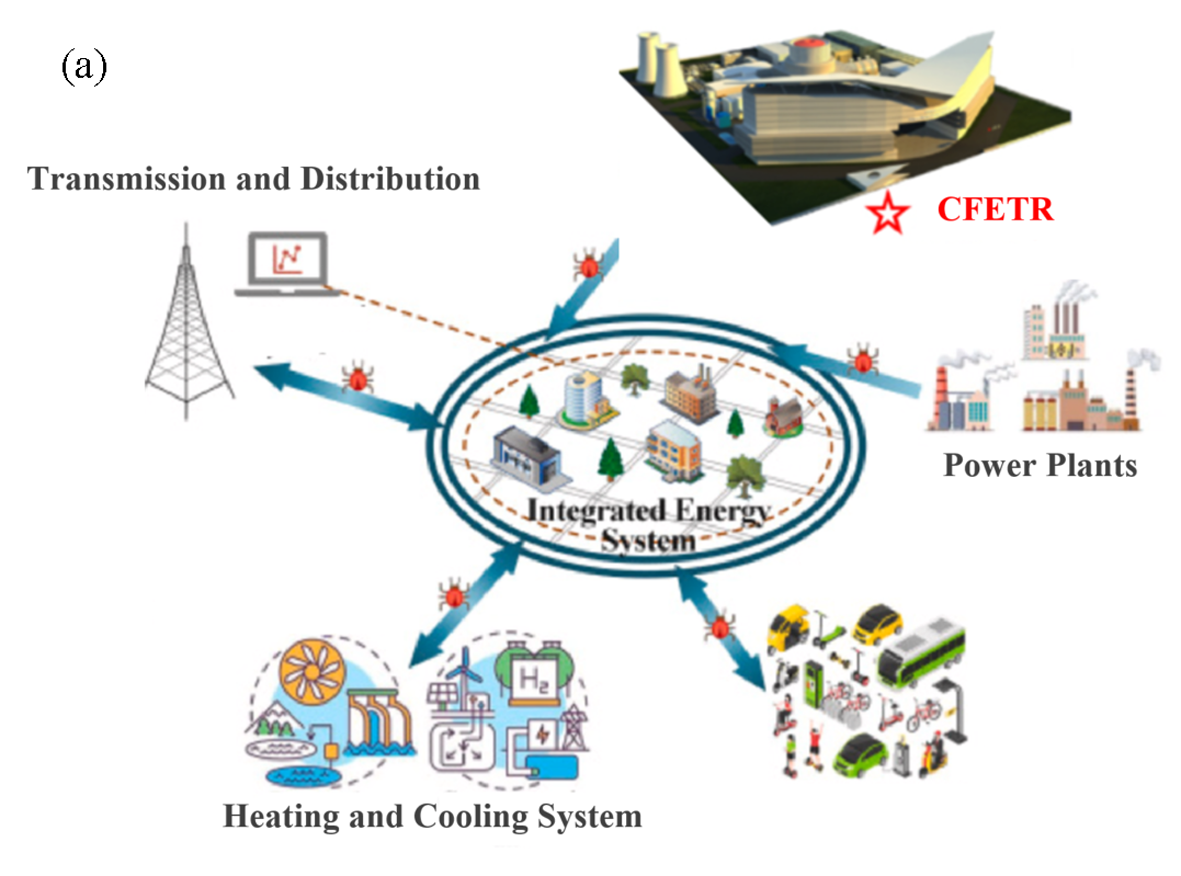
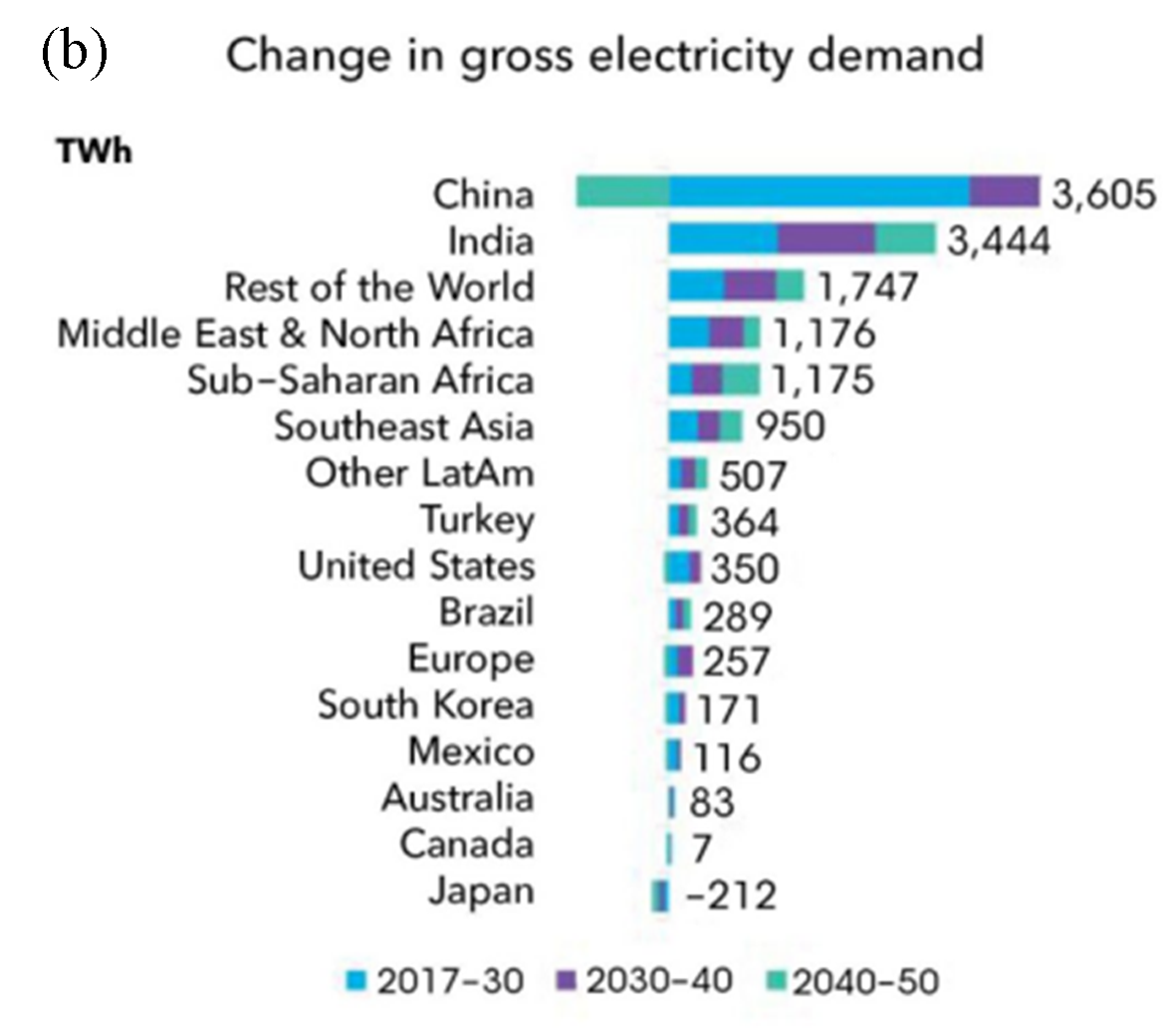
Unlike many previous studies that treat heat extraction and power generation as independent subsystems, this review emphasizes system-level integration, highlighting how temperature mismatches between reactor components and power cycles can lead to significant exergy destruction and reduced overall efficiency. Design and operational insights from major international fusion programs, including ITER, DEMO, CFETR, EAST, SPARC, Wendelstein 7-X, KSTAR, and other tokamak and stellarator devices, are synthesized to bridge conceptual designs with experimental and long-pulse operational experience. The overall framework of fusion heat extraction and its application, as discussed in the review, is shown in Fig. 1(a). Fig. 1(b) illustrates the global energy demand map from 2010 to 2050.
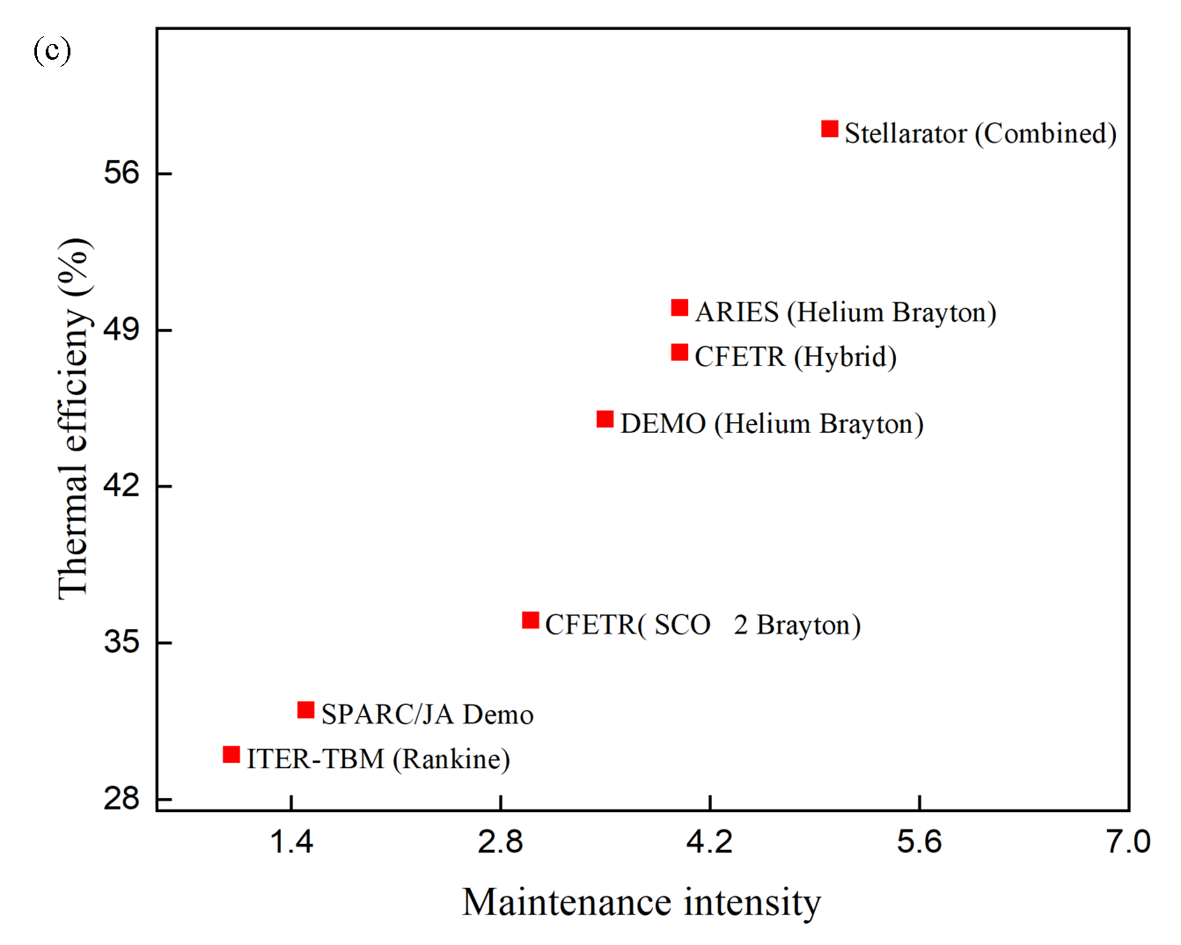
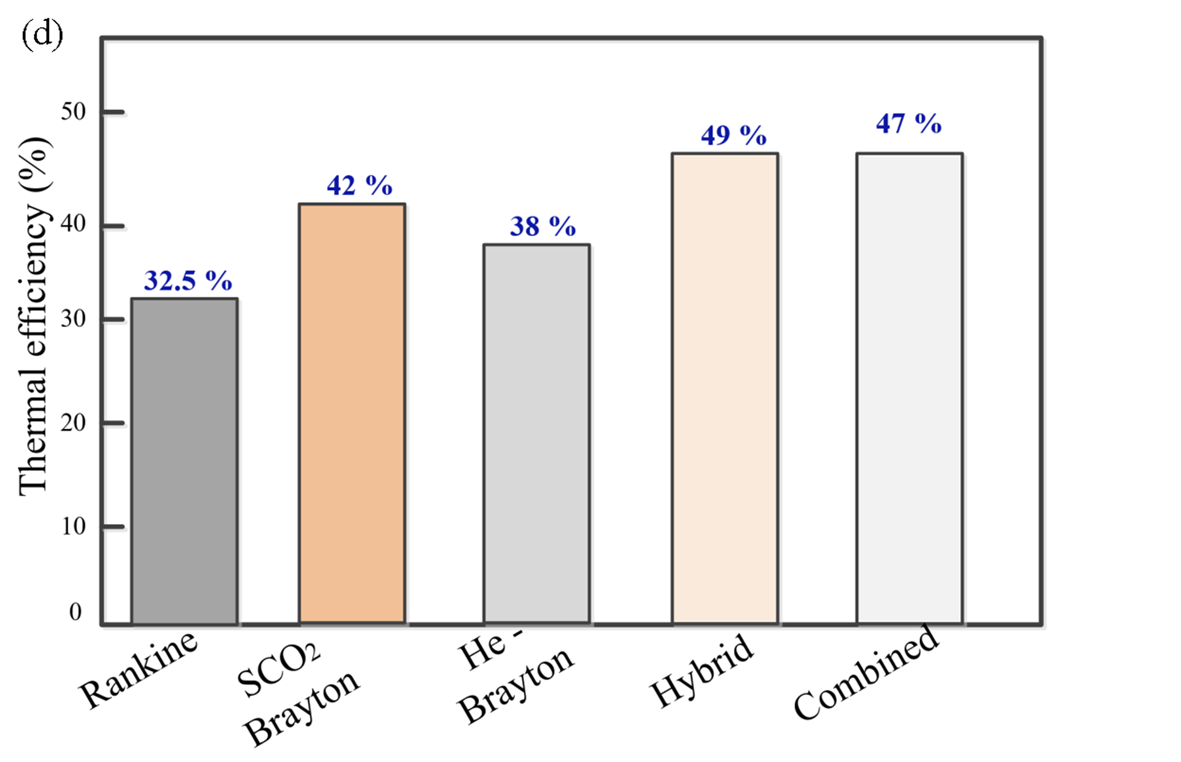
The future research directions for fusion power plants include hybrid Brayton–Rankine and Brayton ORC architectures, cascading utilization of multi-temperature heat sources, advanced working fluids, and the application of digital modeling and machine-learning-based optimization techniques to enhance thermal efficiency and system reliability in steady-state fusion reactors. The thermal efficiency against the estimated maintenance frequency for representative fusion power plants is shown in Fig. 1 (c). Meanwhile, Fig. 1 (d) demonstrates that a combined cycle or hybrid cycle provides a better solution to fully utilize the thermal power of fusion power plants with improved thermal performance.
“This review provides a unified perspective on how fusion generated heat can be efficiently converted into electricity,” said Prof. Guo Bin. “By identifying key challenges and proposing integrated solution pathways, it aims to support the development of high-efficiency and reliable power conversion systems for future fusion power plants.”
© Institute of plasma physics, Chinese Academy of Sciences

Official account


